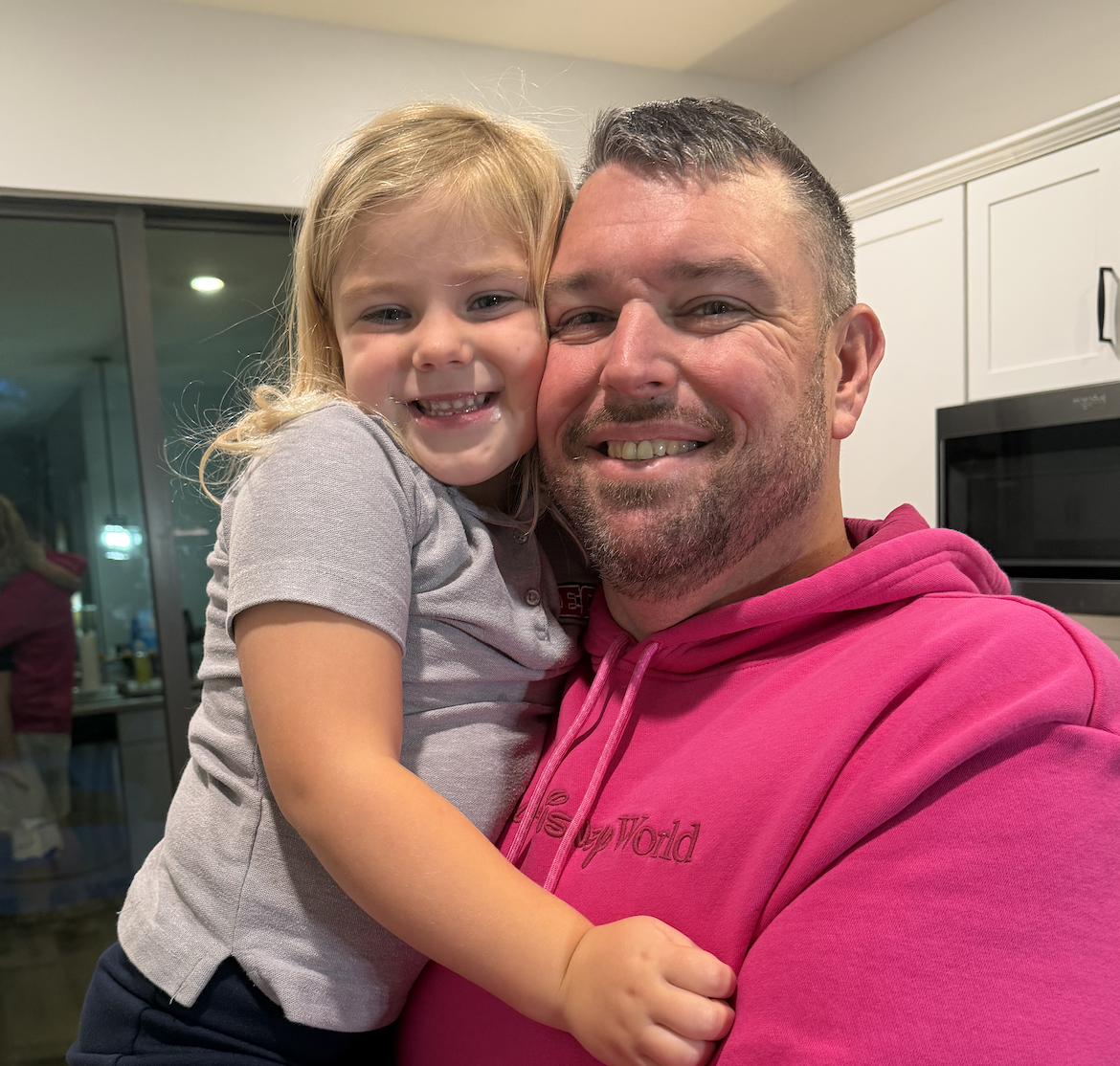
One of my strongest-held parenting values is that I say I’m sorry to my kids when I’m wrong.
I think apologizing to your children simultaneously builds humility in you and them. To know that a grown-up would own a mistake, a wrong they’ve made against you? That’s life-changing.
I still remember the first time my daughter grasped what an apology was. I’d been frustrated with her for something, and I didn’t handle it well. We were in our kitchen in Oklahoma, and after things had cooled down, I got on my knees, right at her eye level. I looked into her little then-4-year-old eyes, and I said, “I’m so sorry I yelled at you. Would you forgive me?”
She stared at me, totally engaged and yet completely blank for a moment, processing what I’d said. And then, if you can believe it, she laughed. It was this totally unexpected little delighted giggle.
“Say that again,” she said.
Then it was my turn to laugh. I couldn’t help it. She liked how it felt when I told her I was sorry.
I repeated myself, obliging her endearing request, and she hugged me. Then we moved on with our days. It was a super simple, quick passing moment, but it’s stuck with me that even at four, the soul still lights up when another person sees you and values you enough to seek repair. It signals, I think, that I respect you as another human being.
Tim, a friend and leader at Become New, reminded me of this quote from John Ortberg recently: “I, and I alone, am responsible for the health of my soul.”
John Ortberg has a book called Steps, where he takes the classic 12 Steps (the ones usually tied to AA) and reframes them as a path anyone can walk for ordinary soul work. He names why taking responsibility for our own behavior can be so hard for most of us: “We suffer from the fundamental attribution error, where we attribute our bad behavior to external circumstances (‘I snapped at my child because I’m under stress’), but we attribute other people’s errors to their character (‘He yelled at his child because he’s a bad parent.’). We over-pity ourselves as the victims of unfair criticism because of the negativity bias. We carry prejudices we’re not even aware of because of implicit bias.”
In other words, when it comes to apologizing, I believe context doesn’t dictate my ability to (or not to) apologize. I can still work to mend things with my girls even when I have plenty of reasons that I’m “right.”
It doesn’t matter if the kids got in 246,891 fights with each other today. It doesn’t matter if they were ungrateful, or impatient, or complained a lot. It doesn’t matter if I’m tired and I’ve served them all day.
Ortberg actually has an FAQ for this exact excuse later in the book, in the section on making amends (Step 8). He lists a bunch of objections people usually have to making amends. One of them is “What if they hurt me more than I hurt them?” His answer is basically: you’re not six years old. It makes me laugh every time, because how true is this? We want to focus on the other person, not ourselves. John says, “Your focus in the amends process is on what you have done. You’re cleaning your house, not theirs.”
If I lost my temper even once and yelled or acted in a way that was unloving, they’ll be receiving an apology from me.
I actually listened to a sermon from John Mark Comer recently that inspired this newsletter. Here’s a link if you’re curious. Bridgetown Church did a series on repentance and forgiveness, and in this specific sermon they role-played how to apologize.
It’s pretty remarkable (and sad) that saying “I’m sorry” is a dying art. John Mark talks about how many people these days don’t even fully know how to apologize.
For this edition, I thought it might help someone to sit with a few reflection questions, and then borrow a handful of apology prompts, in case you’re overdue for some repentance. As always, I’m no expert, but this is something I’ve been actively working on and thinking about for roughly a decade (and definitely since having kids almost 6 years ago).
I’ve talked about this before, but there are four short character-building statements we should all be regularly practicing:
- I don’t know
- I’m sorry
- I was wrong
- I need help
Today we’re gonna strengthen #2. ❤️
Okay, here we go. I’d invite you to reflect on the following:
When is the last time I did or said something incongruent with the person I want to be? Did I apologize to anyone for it?
When is the last time I confessed something to God and expressed sorrow/regret for my behavior?
When’s the last time someone apologized to me in a way that was heartfelt and genuine? What might I learn from that apology?
Maybe today you find yourself in a place where you do need to tell someone you’re sorry. That can be really hard, especially when repentance doesn’t come naturally. I know that for me, conflict resolution wasn’t always necessarily modeled healthily—and I know that’s true for so many people out there, too.
So, if you’re like me and you’re still training up those I’m Sorry muscles, here are some word-for-word scripts you might consider borrowing:
If you made a mistake that hurt someone: I’m so sorry for __. Though I didn’t mean to, my actions hurt you, and that breaks my heart. I know intentions and actions are two different things. I never want to see you in pain, and certainly not at my own doing. In the future, I will take better care to ____. Could you forgive me?
If you overreacted to something: I wanted to let you know that I considered my reaction to __, and I’m sorry. I blew things out of proportion. At the time, I felt __, and I let that cloud my judgment. I want you to know that I see things clearly now, and I can understand that ____. Can you please forgive me for the way I overreacted?
If you regret something you did: I’ve been thinking about when I __, and I want you to know I regret it. I’m so sorry that I hurt you. I would never want to cause you pain, but I understand that by __, I probably made you feel __. Is that true? In the future, here’s what I plan to do differently: _____. I’m deeply sorry. Could you find it in your heart to forgive me?
Or here’s a simple prompt I like to use with my kids when I get angry at them: Hey, I’ve calmed down now, and I want to say I’m sorry for yelling. That’s not the mommy I want to be. I was frustrated, and I shouldn’t have reacted that way. I love you no matter what. Could you forgive me?
Finally, even if you don’t agree with someone but still desire to repair the relationship, I think this is a solid starting prompt: Hey, I’d love to talk about things between us right now. I have to be honest that I still don’t agree with _____. Even though that’s the case, I still feel sad/regretful/unsettled (etc.) about the way things are between us. I’m sorry for my part in how we got here. I understand that we might never see eye to eye on this topic, and I’m wondering if you’d be willing to agree to move past it together. I miss our friendship/relationship, and I’d love to move toward reconciliation if you’re open to it.
The thing about life is we’re not getting out of it without hurting and being hurt. Apologizing and choosing to forgive is part of being human. It’s a skill that, should we choose to improve, will increase our relationships and likely thereby our quality of life. Not to mention, apologizing freely will shape us into the image of Christ.
I’m on board for that… even when it hurts.
In Progress,
Alyssa